November light in North London at four-thirty in the evening is a Kodachrome delusion. It’s a saturated gold, bleeding but blurring at the edges, halatious, homely, glimmering, and glowing, the crushing atomic, photonic mass of fifty-six hundred Kelvin collapsing vehemently, violently, vitriolically into bruised oranges and peaches, beaten and battered. Miraculous exposure. The coldest of chemical creations. It’s the kind of skyward symphony one notices but hesitates at for a moment, because at astronomic place-scales it’s hard to deduce the fine line between holy equanimity and heavenly war, between gunpower fireworks and nuclear Armageddon, between something you should run towards or away from.
The Armistice held strong over Primrose Hill for this particular evening, though. I was grateful for that. Thank you, O Father, thou art in Heaven, hallowed be Thy name. The dying, muted golds you cast down that evening made the Victorian brickwork look like it was still capable of believing in you. Miraculous exposure. Modernity notwithstanding.
Thank you, dear LORD, for today, today in its lighted yesterdays, today in a soon-to-be yesterday that I seem, at times, perpetually bound to. You know, it’s hard to be present when the light moves so fast. Sometimes it feels like I just float through these days, though they’re filled with such loveliness. I often catch myself in these moments afflicted with a strange and divine awareness that these precise minutes and seconds playing out before me are ones that will resonate in my mind for reasons that elude me. Miraculous exposure. Memories, making, mnemonic, and monumental. Pinged and panged, nevertheless, at ignominious intervals with a sudden awareness that things will end, and what it will feel like when it’s over, when the silence and the quiet replaces the lovely laughter and presences.
Not tonight, though. Tonight, on one of my last nights in England for a while, I ascended the muddy slopes of Primrose Hill with a cold Spanish beer in one hand and my camera in the other. Some dear friends I’d met the night before, all locals, told me this hill and this neighbourhood was somewhere I couldn’t miss. The highest point in all of London.
I came to England that autumn as a fugitive from my own happiness, on an impulse-booked flight serving as some desperate bypass from the heartthrob of a home that had begun to feel like a countdown. There was no horror I had to run away from, only the visage of permanence itself. Afoot, light-hearted, and homesick, I took to the open road to drift in eternal newness.
Instead, though, tonight, in a place farthest from home, beneath skies that were foreign and European, not mine in the slightest, my breath misted in the cold air. It was unmistakable. A maritime cold I knew well, the sort so wet and heavy it envelops you when you step outside. An oceanside air that weighed you down. This wasn’t just a British cold. It was a Pacific Northwest cold. My New World home was far, far across the ocean, but somehow, the air was the same, and so was the light. It was like I carried my home with me across the ocean, though I tried to escape it, for the fear that my stars were shining too bright, or else I had squeezed it too tight of its loveliness.
As the dusk deepened and the heavenly war drew to its deep blue dark, I was pulled like a magnet down the slope again towards the shops of Fitzroy Road, glowing like amber lanterns in a curated dream, with the magical muteness of the short hour just after sunset when the lights of the interiors match in brightness the soft ambient blues of the setting sun. As I wandered among the bookstores and the cafes and the pubs and the shuttering storefronts, I saw the ghosts of all the people I loved and grew up with, revealed at once by a familiar book, a colour in a memory we shared, the sight of a bird or a plant or something or other that conjured the déjà vu that seems in these days to form the very fibres of my soul. If I were destined to carry my loved ones with me forever, if only in memory, then maybe we’d have already won, comprehended incomprehensible distances present and future. Maybe the loveliness didn’t have to end after all. It would live on in our constellations of echoes. The way memory echoes another, and another, and another.
Ghosts, ghosts, all this business of ghosts. Ghosts don’t have to haunt you, do they? Primrose Hill wasn’t just haunted by my loved ones. That neighbourhood, it turned out, housed the greatest of all spectres, the most audacious of dreamers. In my wandering I spotted little blue plaques on the houses and old Victorian buildings, and my muddied boots on the pavement before them stood in mute witness of the fact that all my longing and my dreaming was not just mine. It was as human as leaving itself. I stopped at each plaque. They shot me dead.
One plaque: ‘FRIEDRICH ENGELS, POLITICAL PHILOSOPHER, LIVED HERE.’ Engels lived here, sheltering Marx as they wrote books that would shatter the fibres of the Old World. For all their faults, they were dreamers of dreamers. They believed they could start the world anew, like the Americans and the Soviets in their delusional, modern, New World dreams, of life, liberty, and the pursuit of happiness, or not, of global revolution and proletarian liberation, or not. The content of their dreaming is a matter for the philosophers and the politicians and the essayists. The defiant audaciousness of their dream is what matters to me.
Another plaque: ‘W.B. YEATS. IRISH POET AND DRAMATIST, LIVED HERE.’ W.B. Yeats wrote here, in all his mythic wisdom. He understood the deep heart’s core, that the world was more than its chemical creations. If Engels knew to how to dream then Yeats knew how to remember, and there’s something in that conscious remembrance that keeps us tethered to the Earth and the places we call home.
Dear LORD, it’s all so lovely, this literary journey of mine. Miraculous exposure. I felt like I could believe in you again.
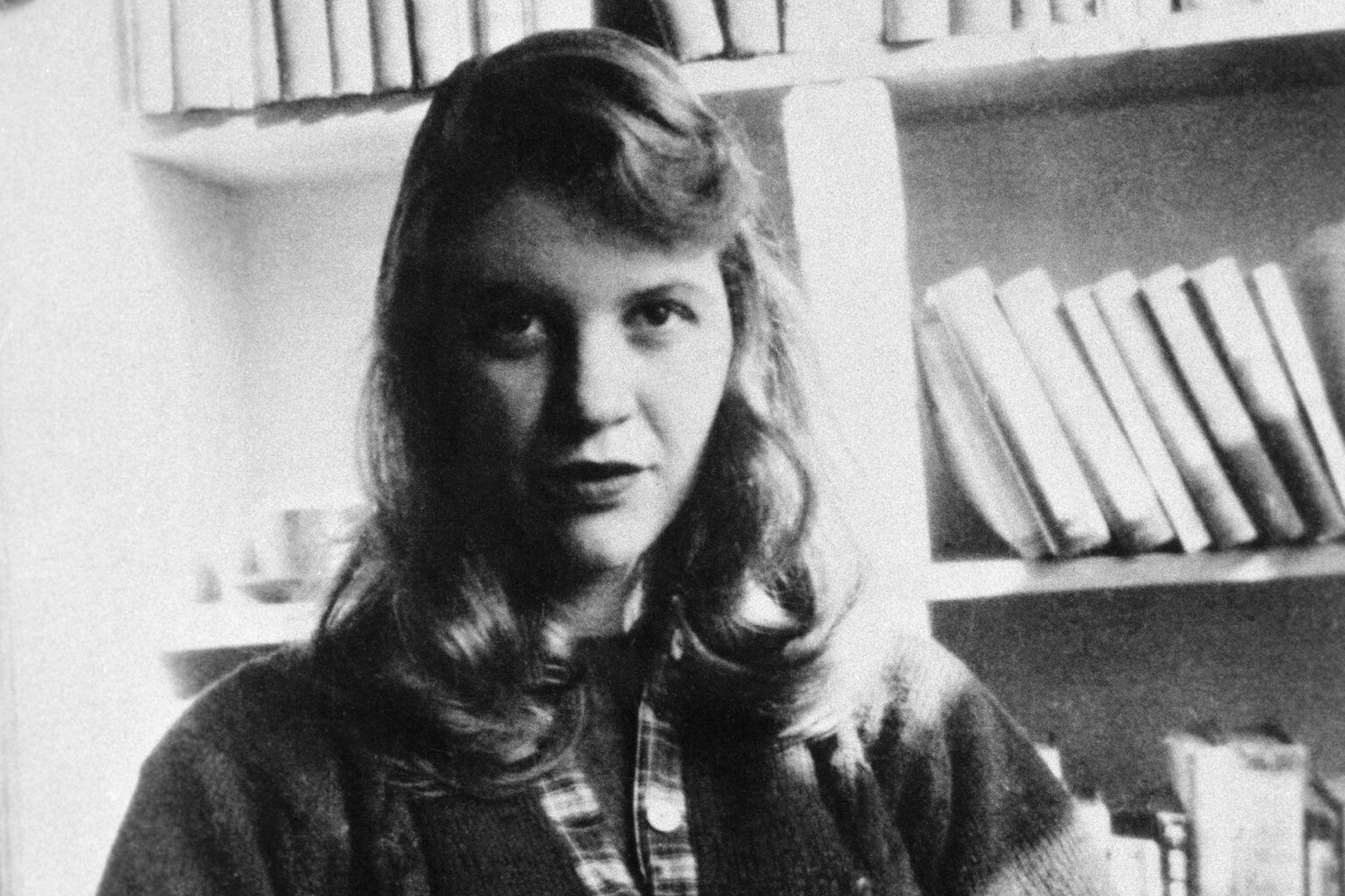
One more: ‘SYLVIA PLATH. POET. LIVED HERE.’
And then the Armistice broke. The loveliness was gone.
Sylvia Plath died here. She stuck her head in the oven because she wanted to die.
I was once in a kitchen just like Sylvia’s, except far away on a tropical island, when I learned that a man of my lineage had passed away. I loved him very, very much. That night, he visited me in my dreams, and he pinned me down, and pressed a red-hot iron into the side of my neck.
I was eleven.
Such was the genesis of my darkness. It was the first time I had ever felt crushing sadness. Darkness of the adult variety. It was the first time, as well, that I prayed, in some hopes that the LORD might hear the exit of his soul and carry him into the arms of cheerleaders and angels.
But after that day, the air on that tropical island thinned and turned scalding, cauterised and incandescent. It hurt so much not just because he was gone, but because he left in the latent heat of his own resentment and misunderstanding. A few months earlier, my father and I had just left that island and crossed an ocean, like all the explorers and settlers of old. Alone in America at the end of history, my father had felt that cold New World air and thought it so beautiful and so liberating he would make it the mission of his rose-entwined life to thrust me, his kin, into the arms of an angel called Liberty. In so doing, however, he faced the ire and the fury of his own father who, in the island’s haze, could only see the betrayal of our departure. Not the wonder. Not that it was the greatest gift I had ever received. On those new shores, we burned our boats, but the fire took him too. The smoke rose heavenward, the sky looked bluffing, and whether or not he knew the precise grains of our freedom became a matter between him and God.
原諒我這一生不羈放縱愛自由.
The brand sizzled, then, as it dug into the side of my neck. A wonder and a departure and a rupture incomplete and unfinished forever, like the black, charcoal ashes of our boats threaded with needles just below my skin, imbedded stubborn and steadfast, no matter my scratching.
Maid of Orléans, my angel face is falling. Feathers are falling at my feet.
The killers are calling on me, O LORD.
In the years since I have continued to grapple with a debilitating cognisance of endings. On the road again and again, futurely and desperate, every home or point of arrival became just another point of departure. I like it that way, though, when I could believe in that dream. The New World shores where I knew my first real home promised me I’d be an heir to a glimmering world. A dream that everything could be new and new and new again for all eternity.
As I made a home here on distant shores, things had started to get better, and it made me uncomfortable, as if not existing in a perpetual state of longing was unnatural and disquieting. A sort of compounding loveliness that left me looking for the inevitable trapdoor I couldn’t yet see. I was happy and stable and in love, and yet my mind couldn’t help but account for when it would end. The road, by contrast, didn’t demand that kind of permanence from me. It allowed for the kind of transience I was best at, a New World obsession with living a life that could be eternally new.
I feel Liberty’s weight, though. Her shadow is Endings. She overwhelms me. She shuts me up and stabs me. And the fruit of her riches is inevitable cessation. What is the attainment of a dream, or the building of a new home, a New World, if not the crippling realisation that one day we’d have to trade it away for something new and larger, and we’d have to start again? No home of ours was ever meant to be forever. We’re here because we’re called to higher things. Liberty calls us ever forward, to out in the harbour, run faster, stretch our arms farther, or so Fitzgerald tells me. And one day, a day that’s approaching faster than I’d like, all this will end. And we will move forth to whatever it was we were destined for, whatever it was we are sailing towards. But the distance will pull us apart. And we will become ghosts. And these dreams will become memories. It was precious precisely because it was unrehearsed. It is irreplaceable because it will never be the same again. Nostalgia will haunt me, it seems, for eternity.
In glimpses of the future I see the fuzzy outlines of a world that I know will amaze me beyond my wildest comprehensions. And the living proof of those older than me shows that life in this future isn’t bad. If anything, I see the outlines of a world I feel I will inherit one day. Of people that make things, daringly. One day that’ll all be mine. But it isn’t yet. And now that it exists solely as fuzziness I wonder if it’s worth starting over and heeding Liberty’s call. But she called me forth once, and then over and over again, and it’s always led me forth into great, great things.
I ought to trust her. But it’s hard to let go.
O Liberty, O LORD, I inherited her anger, too. The older I got, the more I learned and the more I read and the angrier I became. An ancient anger, LORD, it seizes me. Storms the Winter Palace. Or the Capitol. Anger that it will end, anger that it will die. Anger that it’s all just fizzling out, or that it’s fizzled out long, long ago and I’d already missed my shot, and that it’s not quite as shiny as I wanted it to be, that endless dream I found when I first crossed the ocean. Anger that America is nothing I chalked it up to be. The anger I carry now is the heavy, isotopic weight of shattered belief. The heat of that incandescent island is nothing compared to the cold steel of the American Delusion. Dreams stripped away.
He took away my birthright, and behold, now he hath taken away my blessing.
How can one be an heir to a dream that requires you to step over the bodies of the fallen to reach the harbour? Executed. Maligned. Resented. Angel Liberty is bluffing. She is vast, blue, and utterly empty of the protection she promised. And in her shadow, I am a fugitive from my own happiness because I can no longer reconcile the loveliness of my life and the glimmer of my dreams with the vehement, violent, vitriolic reality of the place I call home.
Behold, my birthright. Eternal darkness.
Maid of Orléans, my angel face is falling. Feathers are falling at my feet.
The killers are winning over me, O LORD.
In the name of God, let us go on bravely.
I was once in a kitchen just like Sylvia’s, except far away in the Pacific Northwest, when I learned, for the first time, what love means. I had a dinner party with my friends. It was in my apartment. It felt so adult I felt like an imposter. I’m in over my head. They’d find me out eventually. And the darkness would descend again, but not yet. The Delusions ceased then, if only momentarily, and whence came the cessation of more, more, more. Tall poppies were cut and paraded like table artefacts. My mind raced. Where’s the trapdoor? What’s the catch?
No, no. Spread out onto the table, sleeping on a silver platter, was my medium-sized, middle-class, monachoptic American heart, beating and battered. The glass was soft. The city was quiet. The light was warm. They dug right in. They were all there, all of them, the people I had somehow accumulated across years of arriving and departing, laughing with paper plates and paper cups and paper promises in their hands like we were always meant to be here, like we’d always belong here, like belonging was something you could simply decide. We talked a little about the island, and it helped me be more gracious. We talked about America, and it helped me be more curious.
And we talked about Sylvia.
But we were pretending, the lot of us, beautifully and collectively. Pretending was the most honest thing we’d ever done.
The darkness was there, like it always was, just beyond the heavy wooden door, patient as ever. But it couldn’t get in, not yet.
I felt love for the first time, there, and then now–
–now, on English hills. The work of staying. The price of being an heir to something glimmering and longing.
A girl heard voices. She called them God. She walked into the fire anyway.
In the name of God, let us go on bravely. To England, to England. All will be well.
Dear Sylvia,
I imagine you must have stood on this same part of Primrose Hill looking over North London on many a queer, sultry evening, and indeed, on many a glorious one, too. Were the sunsets you saw back then quite as vivid and real, as halatious and homely, as eschatologically beautiful as the one I saw? Did the gold and the pinks and the purples and the blues, all too real to be technicolour, so real as to be unbelievable, ever wail out the faintest of all hope to you? Hope, I mean, in that luminous, longing way you wrote of your freedom, all grasping and wanting, yearning with all your heart and ability to be an heir to something, or nothing, but something. Something. Becoming.
Miraculous exposure.
I read your book today. You made it possible for me, again, to believe in the words I was reading, believe daringly and heavenward. In recent years, I have found that the more I read, the sadder I get. I miss the audacity of my belief, the simplicity of my pre-enlightenment. If seeing is believing, then I wish I could believe I’ve lost my eyes. But not with you, and your book, Sylvia. I was unmanned by your wonder. It was as though you spoke into the core of my soul, saying things I didn’t think anyone else in the entire world had ever thought. I, too, should be ‘having the time of my life.’ I, too, feel like ‘a champion college footballer suddenly confronted by Wall Street and a business suit, his days of glory shrunk to a little gold cup on his mantel with a date engraved on it like the date on a tombstone.’
I didn’t know what I was doing in New York, either. Or in London. My home was elsewhere and yet I kept running away from it, running towards these so fuzzy of dreams, so bloomy and blown out I can’t make out any of the details, and yet I run head-first into the light anyway. It’s all so lovely, what lies in the great big white of those glimmering dreams. I can spend the rest of my life dissecting them, seeing what comes next and next and next. And maybe there would always be something new to find.
Or maybe it would just slowly burn out.
You told me about your fig tree, where your ‘wonderful future beckoned and winked,’ whose branches stretched out and out and out into the brightest, cloudiest, fuzziest parts of the ether and beckoned you to heed Liberty’s call. Poet, professor, editor. Or wife, mother, servant. Sometimes I too sit in the shadow of this tree and feel like I’m starving to death because I can’t make up my mind which of the figs I would choose. Choosing one meant losing all the rest.
For three years, I had grappled with the geography of my own guilt. All that constant and weary oscillation across the Rocky Mountains, and then the continent, and then the ocean, left me with a heart pushed down and praying, spread thin across the incomprehensible distance on the map. One branch of my tree spanned its arm to the Old World, to ancient certainty, to a lovely, lovely place I’d spent years cultivating and only now has started to feel like home. The other branch – the New World. To Liberty, Possibility. To the precise language of suffocating yearning I have always chosen.
Someday, I would have to choose. And that means that something would have to end.
But there was something about the light on the Hill that night that made the third branch of my fig tree roll ever so slightly into focus. This one is thicker than the rest. Longer, everlasting. Its arms span so wide that it could contain all this dreaming and longing. And missing people. It could span the width of this continent, and then this ocean, and then this world. It’s Memory, and Love, and Hope. Hope with the kind of Hope that you, and your boundless wonder, brought back to me after a long, long time suspended in the purgatory of the map. The kind of Hope present in the stubborn persistence of your wanton aching that made me feel like I wasn’t alone, because I’d known the same Darkness you did, and I still stare it down every single day because your Hope lets me keep it at bay. The kind of Hope, at last, with which you stared down that great beast until it blinked, and the bell jar lifted, if only momentarily, if only with the knowledge that it might descend again, but no matter, because you’d made it out now, and your heart would keep fighting.
I am, I am, I am.
Sylvia. You remind me of a dear friend, who once told me, in her moment of utmost Darkness, that I was the only person in a strange, strange city that was a friend to her. But all I could think about, then, faced down with her graciousness, was all the times I avoided fighting that beast with her because I was too caught up in my own head, pondering. I watched her drown, and I did nothing about it. I failed.
I didn’t give her the Hope you gave me, and the world didn’t give it to you, either.
But I made it down that Hill having learned something about myself: that my life and my joy is a radical act of delusion in the face of a world so, so dark. An American Delusion, first and foremost. For how might a man of dreams, so self-evident and wanting, build his life not just on the pursuit of joy but liberty itself, for its own sake, if he’s not, at least, a little delusional? Despite the darkness and the bell jar, forever part of me and my landscape, in London or New York, in Vancouver or Calgary, I know now there is so much love to be found.
The last rite of my birthright, therefore, is to believe in the dream that my rational self knows is a delusion. I must consider my joy an act of rebellion, a conscious act of defiance. A choice to continue to do the work of staying because the world is awful and yet I choose to beat on anyway and make it not so. To make my home here. A choice to burn the boats because I have crossed an ocean and I must do the work of founding. Can’t go back to the Old World anymore. And my work of keeping the darkness at bay day after day after day may be the burden and the mission and the curse of my life, the price I must pay for all this loveliness. Let the bell jar descend again, and again, and again. I will fight it to the bitter end, boats burned, flags raised, until the sun rises again.
For thine is the kingdom, and the power, and the glory, forever, and ever.
I’m sorry that the darkness took you, and that you could never see the boats you had left to burn. It’s not your fault, Sylvia. The gas just billowed and poured.
You never made it down the Kodachrome slopes of Primrose Hill.
But I did, and I will keep your dream alive.
 line of best fit