
Yesterday morning, I woke up at 3:52 am. I had a lot of trouble sleeping that night, a lot of tossing and turning restlessly in my bed, in my silent apartment in Olympic Village—yet in that hazy fog of an early morning stupor it wasn’t silent. It felt noisy, unceasing. A constant hum of the National Public Radio, CBC Radio-Canada, and the Pod Save America podcast. It all blended together into this droning barrage of deep, smooth voices. When I’d finally decided that any further sleep was a lost cause I got up to fix myself a cup of coffee to realise that there was no sound at all. Nothing played from my speakers. And yet a moment ago I could swear that just eight feet in front of me the radio that sits on my TV cabinet spoke those usual quiet assurances of stability and a sure path to victory.
‘Live from Washington, D.C., this is NPR.’
Fixing breakfast was rough. Everything ached, felt slow and weighed down, but I managed to scrape together some eggs and sausages (though I’d burned the last few of them) and ate them slowly in silence. Unable to bring myself to get dressed for a run, I instead grabbed my camera, slipped on my jacket, and walked down to the seawall, where I sat in my usual secluded spot on the False Creek Ferries dock, looking out at our quiet city, casting a perfect reflection in the still water. There I wrote and wrote and wrote, scribbled some incoherent jumble of words and platitudes. Trying to get just one sentence down—but nothing came.
But a few hours later, I was greeted with the most amazing sunrise. First, the golden light struck the top of the Shangri-La tower, then the recently snow-capped peak of Grouse Mountain. And suddenly the whole sky lit up in this brilliant glow, shades of the deepest pinks and oranges and reds. Like a Prairie sunrise. Nothing I’d expect on the West Coast. Shortly after, I heard the distant spitting of a diesel engine. The skipper of the first False Creek Ferry of the day pulled up to my dock, and seeing my camera, struck up a friendly conversation with me about the sunrise and some of the shots he’d been able to get out on the water. He offered me a ride over to the David Lam dock, free of charge, there and back, just to check out and appreciate the sunrise. I took him up on it, and out we went.
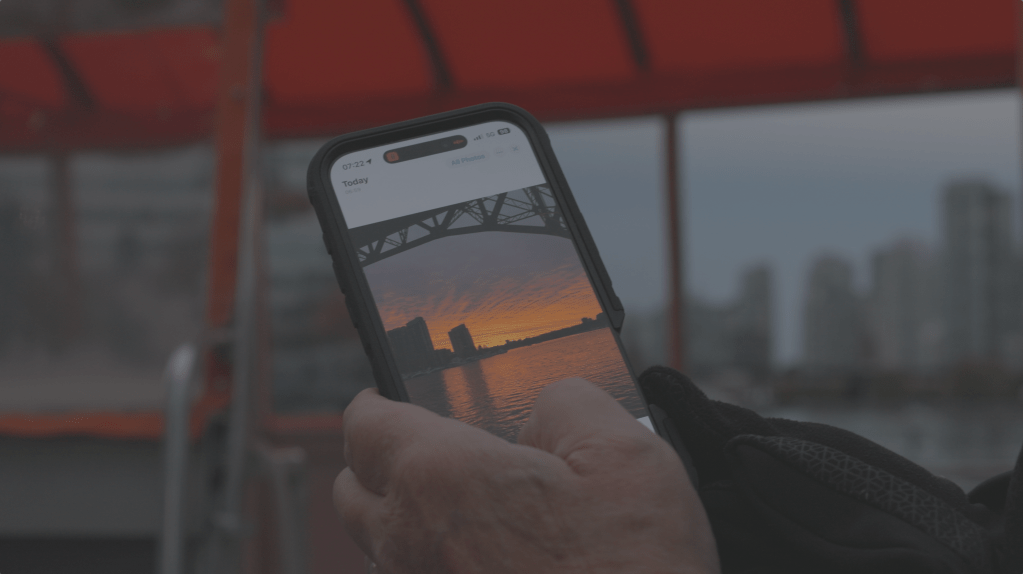
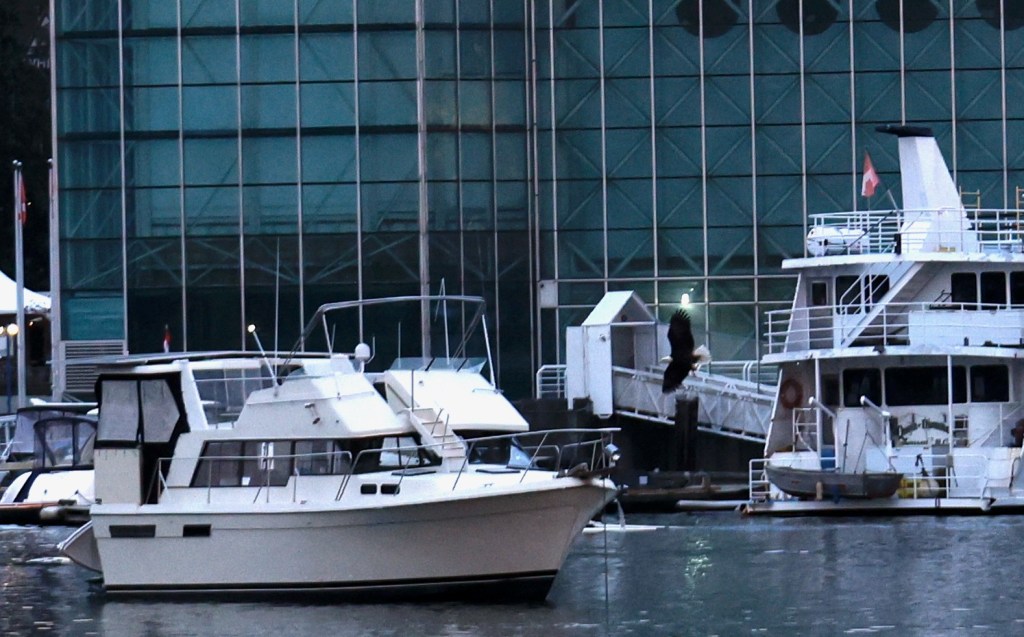
Around Yaletown, the skipper, while making some talk about autumn colours, cut himself off and descended into a sort of giddy whisper. I turned around to see a bald eagle in the middle of the sky, its wings spread out as far as they’d go. He’d pitch up with such impressive speed and let the air take him, only to then angle himself down with such elegance and brace for a glide through the open air, no doubt watching his reflection in the still water below for fish or whatnot. He was a huge fellow, my first time seeing one in the flesh, and it was beautiful.
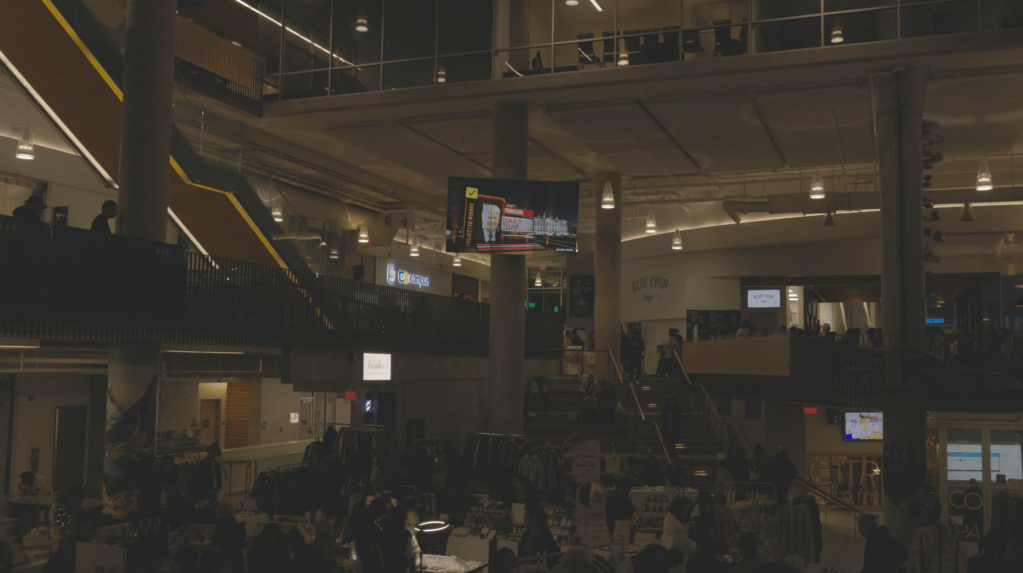
All day I’d been restlessly checking my phone for the latest headlines from the New York Times. I had browser tabs open that I’d flick back and forth from anxiously. Electoral maps, the last polls from the day before, who was projected to win each state. I’d put all my faith in the Blue Wall. That Harris would hold. That democracy would hold. That the America I grew up with, had fallen in love with—the idea of it, at least—would hold. But alas, the watch party I went to that night on UBC campus ultimately proved that a tall order. And this morning, at 3:21 am, I heard those NPR airwaves again, this time left on all night, never ceasing, but at least this time by my own conscious choice. Trump won.
Over the past year or so, now and then, I’ve felt a sort of sheepish self-consciousness whenever I’d catch myself thinking deeply about America. Those leviathan mobs on DC’s steps, that felt, for some airy and faraway reason, like something I was promised was taken from me. I’m not American, not even slightly, and so all manner of political theory suggests I should’ve been watching this election thinking about free trade with the United States or some other material policy position that might as well have been drawn out of a hat, just selfishly figuring out what sort of consequences this would have for Canada and then tuning out right after.
But I can’t do that. Not to the campus in Madison, Wisconsin, where my father, some 40 years ago, became the first in my family to go to university. Those stories he’d tell me of the lake-effect snow from Lake Mendota, pushing his early-80s Yugo through the snow-packed streets, on his way to the Memorial Union, where he’d study, go to class, meet friends, and just bask in that glory of being young and alive.

Not to Seattle, Washington, where seven-year-old me spent many weeks away from the oppressive southeast Asian summers, feeling the salty air of the Pacific as we’d go on little walks along Discovery Park, down to the West Point Lighthouse, that beautiful thing, on the start of a long ride across the continent to Calgary, AB – the only place, up until that point, that’d felt like home.
Not to Irvine, California, where fourteen-year-old me reunited with my childhood best friend at a Ramen restaurant. A friend I’d had no business losing touch with and lost touch with I did nevertheless, because of the distance so inherent to being a transplant, an immigrant, and yet some seven years hence we’d still gotten along just fine.

Not to Philadelphia, Pennsylvania, the terminus of a cross-country road trip I’d done when I graduated high school, hitting some 22 states along the way, one last summer spent with my family before I’d move out west. The end of one life, the start of another, and that liminal space between I’d chosen to spend in one of my favourite countries on Earth.
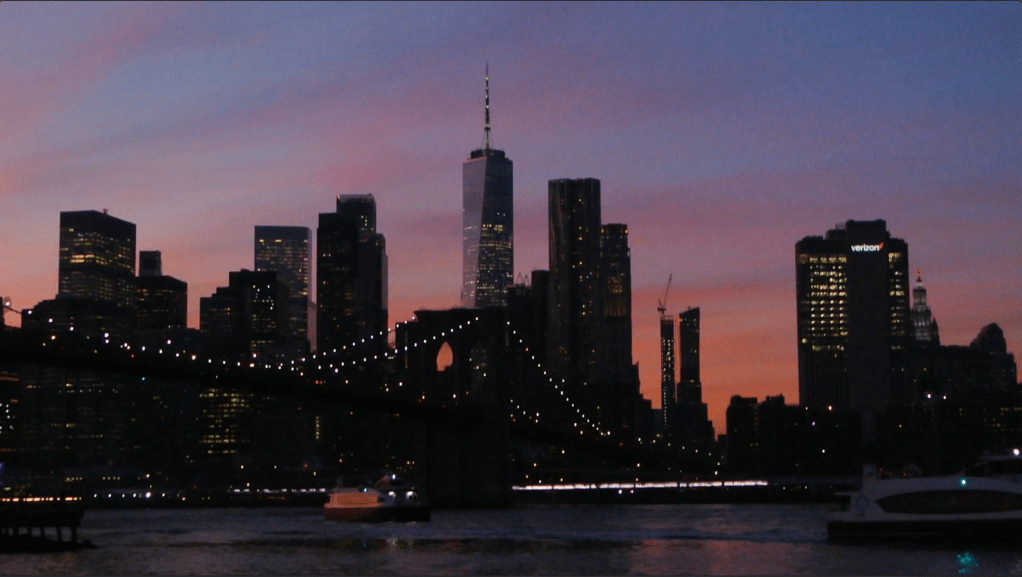
And certainly not to New York City on November 16, 2023, with the sun setting over a rosy Manhattan, the golden light striking a city that proved to me once and then over and over again, that freedom is indestructible, and that everything would be alright.
I can’t just resort to apathy when I know that America has been the site of some of the greatest days of my life. When I think about all the people I know and love—who make me, me—who call that land to the south of us home, well and truly home, I can’t imagine the fear you must feel now, on November 6, 2024, and for that, I can only wish you well, offer you my support, because I know the loss I feel today is a pittance of what you will have to face in the coming days, the coming years.
But I’ll leave you with this:
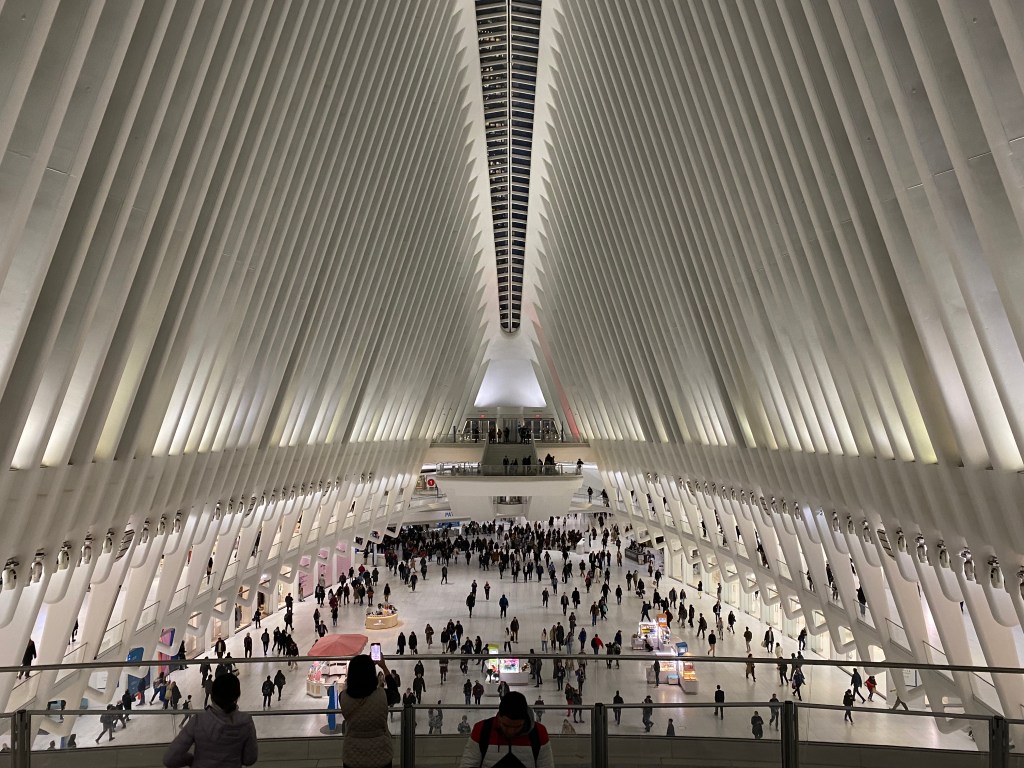
When I first visited New York City in 2022, I visited a place below the One World Trade Centre called the Oculus. I’m ashamed to say the place made me cry, and I wrestled for years after on why it had such an embarrassing effect on me. Recently, I think I’ve found out why. It’s this great, white, cavernous space, these pristine steel pillars rising at an angle to converge above. It’s solemn, this place, where the Twin Towers once stood, where tragedy and darkness and Armageddon converged in two clouds of dust. And yet, contained in this great white hall, its pillars like a ribcage embracing the human heart, was so much life, this mass of people, people going home to their families, going to work, leaving the city or just coming in for the very first time. Everyone just doing. Doing something, separately, but together, in this huge, enclosed space, and it’s as if the whole world were there, all the infinite possibility I’d felt as a kid, and I knew then that the dream isn’t dead, and it never would be, for so long as we’d never lose sight of that freedom that I felt then, looking into that mass of people, there’d be nothing, nothing, nothing beyond our capacity when we’d do it together.
Things are dark now. They will be for a while.
But you can’t tell me that the dream is dead. Because it isn’t. I know it isn’t. Because I’ve stood at the doors of this brilliant white spectacle, the entrace to this world inside a glimmering world, and danced in the sublime company of something greater and better and stronger than myself, stronger than any leader, any representative, any political movement. It’s the idea of America. Dynamism, creativity, forgiveness, freedom, hope.
America will survive. It won’t die now, can’t die now. Because we’re ‘the heirs to the glimmering world.’ We ain’t going anywhere. Don’t let anybody tell you otherwise.
 line of best fit