A Short Story.
It came upon him suddenly, swiftly splitting through his chest and stomach, seemingly in the absence of reason. Its asphyxiating invisible hand dug into his neck and tore him from his blissful rest, prematurely dragging him back into the intoxicating fabric of reality. It implored his heart to pound savagely against his chest; made his every limb tremble uncontrollably as though his body was a kind of industrial machine teetering on the brink of catastrophic failure. Most of all, however, it enveloped him in a certain darkness with which he had grown well-acquainted but in the face of which he possessed neither comfort nor understanding. Indeed, there are a great many things that Paul Hamlet does not understand; why he tolerates his dull, monotonous job as a data analyst for some faceless corporate conglomerate, for example; why his incessant night terrors continue to trouble him, or perhaps how he justifies the terrible privilege of his suffocating existence.
Searching within himself for some inkling of strength, one that he inevitably finds, albeit with great effort, Paul rises from his bed and shuffles cautiously to its edge, peering out the tiny window of his claustrophobic, dilapidated, four-thousand-a-month Tribeca studio. Through the snaking tatterdemalion of high-rises and old factory buildings, Paul manages to make out a faint, yet bleak vista of the Hudson River in the distance, and though he would have liked to continue this thought, it strikes him then, rather irritatingly, that even at night the constant sirens, honking, and other noises of New York City never cease to agonisingly rattle his brain. He begins to question, as he did every night prior to his one, why he moved to this godforsaken city in the first place, and for a brief moment, he stumbles upon a grain of nostalgic fervour.
The innocent, naive Paul of ten years prior had moved to the city to pursue a degree in music from New York City. Back then, he had been so blinded by the beauty of life, so eager to leap out into some ambiguously-defined music career, so captivated by this view of the city as it were, in all its wild promise of the endless possibilities the world had to offer; all through the vessel of his tattered telecaster. In those seemingly centuries-ago, surrounded by his friends and loved ones, Paul remembers how he continually fixated upon a certain instinct of meaning, one that called him to do the things he loved, to spend time with those he cared about. Somewhere along his journey, however, he had lost that instinctual calling, yet the reasons for his present suffering seemed to constantly elude him. Now, the music of the city he had once adored had somehow descended into a cacophony of noise. He thinks of his dead-end data analyst job, which he took up following a short-winded, irrational outburst of insecurity amidst the simmering anticlimax that followed his graduation from university, and ponders, with unaffected scorn, how mindlessly staring at graphs and charts day-in and day-out might contribute much of anything to the world. He recalls how, time and time again, he found himself mistaken for strangers by his own friends; after all, they have families now – children to provide for – no time for the youthful elations of mere socialising or ‘catching up’ – how juvenile, how irresponsible.
As he stares out mindlessly at the bleak urban landscape before him, Paul finds himself, for no identifiable reason, consumed by an enveloping sense of loneliness. At first, the thought is numbing, then slightly melancholic, but soon it swells into a cloud of existential dread. Tears begin to well in his eyes as he becomes consumed by a wistful longing for a version of Paul Hamlet that no longer exists. In a burst of despair, he cries out, seemingly to any who cares to listen, for an end to his suffering. A part of him even wishes he were dead.
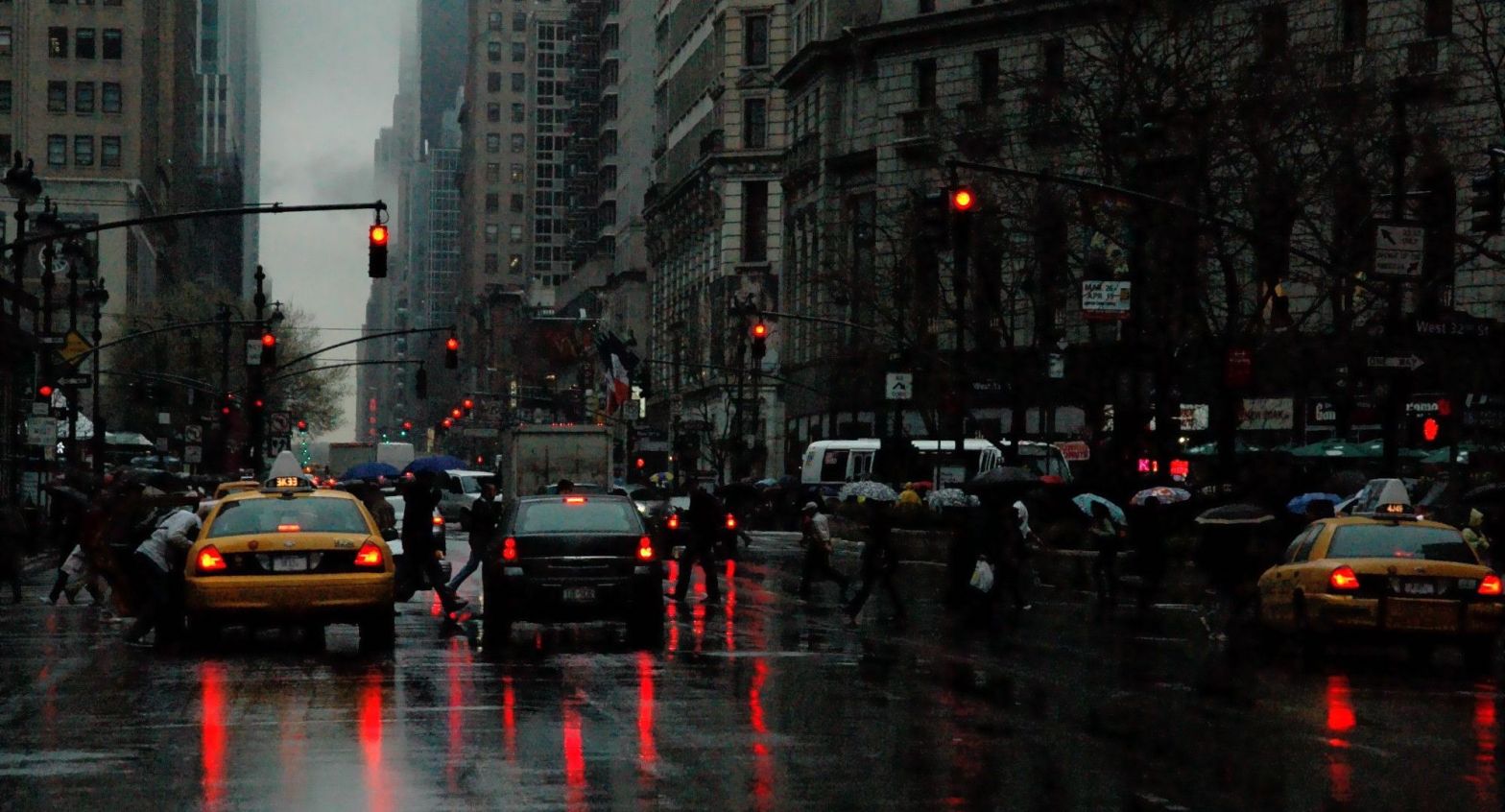
He realises then that, even in spite of all his suffering, the thought of death deeply terrifies him, and he began to berate himself for even allowing such thoughts to enter his mind. Almost without thinking, Paul leaps to his feet and, in one swift motion, wipes the tears from his eyes, hastily slipping on his flimsy windbreaker before descending the rickety elevator of his apartment complex. There is no presence about him as he contemplatively strolls through the streets of New York City. In many ways, he seems merely like a shadow, and were it not for the flickering streetlamps and silvery Citibank lights that occasionally illuminated his hooded face, he might easily have been mistaken as such. Paul walked with his head down, absentmindedly turning up, down, and across the city’s endless avenues before reaching Central Park. The park, though certainly not exempt from the city’s incessant noise, had always seemed to Paul in the late-night hours to be a place of refuge; a solitary haven where, in most cases, he could be alone with his thoughts, uninterrupted by the myriad of distractions that the city often threw in his path. There was but one exception to this fact, however, one distraction that was, in and of itself, inescapable; the rain. Paul had been so withdrawn from the present moment that he had failed to notice the dark grey clouds that had begun to emerge over the city as he walked to Central Park. Within seconds, the light drizzle turned into a raging storm, forcing Paul to take shelter under a small gazebo.
Out of the corner of his eye, Paul notices a frail, stumbling man of about sixty, hastily carrying a small shopping cart under the gazebo to take shelter from the rain. The man’s hair is unkempt, as though it had not been washed or cared for in years, and his clothes are tattered and stained. Initially, Paul dismisses the man’s presence – after all, in a city as unforgiving as New York, homeless individuals had become all-too commonplace. Upon closer inspection, however, he comes to recognise the man as his former professor from NYU, but before he had time to process what to do next, the professor had already appeared before him, a forced smile smeared across his face.
‘Paul! It’s nice to see you,’ the professor remarked. ‘Real shame you have to see me like this.’
‘Professor! It’s wonderful to see you too,’ Paul responded, at a loss for words. Stammering, he asked ‘How have you been?’
‘Agh – things have gone downhill for me,’ the professor began, ‘They let me go from NYU back when the recession hit, lack of funding they said. I haven’t been able to support myself since.’ The forced smile fades from the professor’s face about as quickly as it had appeared.
‘That’s terrible. I’m sorry.’ Though his words are few and far between, Paul is suddenly overcome by a feeling of commitment to the professor, and for reasons he is unable to explain, he feels an explicit need to be a source of comfort to him. A brief silence emerges between the two as the professor visibly attempts to collect himself. After a few moments, he continues, his voice growing increasingly shaky.
‘An old colleague of mine put it this way, see. At the end of the day, it’s all just atrophy. We’re nothing but little clumps of atoms and energy, and eventually, it’s all gonna waste away, so what’s the damn point? I used to think he was crazy for saying that, but now, I can’t help but believe him. What use is trying to have a meaningful life if it all means nothing anyway?’
‘I wouldn’t say it means nothing,’ Paul began, ‘I think a lot of it has to do with your perception of it all.’ Paul stops himself, unsure of what truth there is to his advice. Impulsively, however, he chooses to continue. ‘I think… it’s not just about staying alive, but about finding something to live for.’
‘What is there to live for though? You know, I used to hear music in this city. Not the music that you and I used to study, but the music of life, if you will. It used to be everywhere, in my family, my relationships, my job, hell, even just in the energy of the city as a whole. Now it’s just nothing but noise. And if the music’s ended in life, then what’s the damn point in living, huh?’
‘Well, just because you know the music will end, what reason is that not to listen?’ The professor pauses, deep in thought. ‘I mean, of course, that sounds ridiculous, but who’s to say there’s no music left in the world? Who’s to say it has to be noise? See, I believe it’s entirely within our ability to create this meaningful life you speak of, but it’s about taking responsibility for that and actually doing it, rather than sitting there and letting it waste away.’ The professor finds himself at a loss for words. After a few moments, he speaks.
‘I suppose you have a point, Paul. Thank you.’ The professor gives Paul a smile, though, unlike the forced smiles the two had exchanged before, this smile held a degree of authenticity to it. Paul reasoned that perhaps some inkling of genuine gratitude lay behind that smile and, for a moment, he felt slightly proud of himself.
***
An hour has passed. As much as he appreciates the conversation with his professor, Paul begins to feel himself drifting off to sleep – after all, he has always found conversation rather exhausting in excess. Additionally, the storm had only grown stronger over the hour, and thus, Paul reasons that it is best for him to begin heading home. Following some brief goodbyes and well-wishes, Paul briefly embraces his professor before rushing back to his apartment, using his windbreaker as a makeshift umbrella. Despite living only a few blocks away from Central Park, the journey back to the apartment seemed to Paul like an eternity, which only further exemplified his gratitude when he finally entered the safety of his complex. As he rode the elevator back up to his floor, however, that gratitude began to give way to feelings of shame. The more he reflects upon his conversation with the professor, the more he grew disgusted with himself; how hypocritical of him to divulge such advice when he himself was unable to recognise its importance. Yet the inquisitive, optimistic part of him begins to wonder if what he said was indeed true. After all, if the capacity to find meaning in his life lies entirely within the extent of his abilities, need he not simply stretch out his hand?
Paul enters his apartment and returns to sit at the end of his bed. Through the paper-thin walls of his unit, he can faintly make out the sound of his neighbour’s radio, and the dying strains of a song about hope have him feeling wistful. ‘It’s up to me now, turn on the bright lights,’ the singer proclaims in a moody tone underpinned by hints of despair. Paul reaches over to crack open his window to let in a gentle breeze, careful not to let rainwater in. Then he falls back onto his bed and stares at the ceiling, captivated by nothing but a simple, innocent thought; how much he loves the smell of rain.
 line of best fit